The Best Guide To Bone Handle Knives
Wiki Article
All about Bone Handle Knives
Table of ContentsBone Handle Knives - An OverviewOur Bone Handle Knives PDFsBone Handle Knives - TruthsThe Greatest Guide To Bone Handle Knives7 Simple Techniques For Bone Handle KnivesIndicators on Bone Handle Knives You Should Know
Absolutely nothing looks as rich as well as organic as cream color, polished horn, covering, or coral. It is fairly typical to see a fork of an antler used to sustain or elevate a knife on a display screen stand, and though that is where the majority of us start in our pursuit to display a knife, an evolution of that procedure is unavoidable in the finer functions.Together with timber, horns and antlers are most likely the earliest knife handle product. Horn as well as antler can be left harsh, refined, or carved, sometimes scrimshawed or distinctive. Though they are comparable and also typically referred to in the exact same referral, there are some vital differences. Horn is mostly a derivation of hair, actually hollow sheaths of keratin, firmly compressed as well as stuffed in a solid development.
Horns are typically extra dense than horns. Antlers are a porous bony appendage that are lost each year, so horns are a renewable energy. Elk, mule deer and also white trailed deer are examples. These sheds can be an important find in the woodlands of our nation, and several hikers head out in the early spring just to gather shed horns.
Get This Report on Bone Handle Knives
Some antlers are better than others. Typically, the terms horn as well as antler and also stag are swapped, which can trigger some confusion. Each one is entitled to some unique focus: (likewise called stag horn, deer horn): In America, this originates from the annual sheds of both the Burro Deer as well as the Whitetail Deer.They are probably the least costly of handle products on this page. The best use of deer antler is by mindful choice of thick, heavy sections that are on the surface area of the horn.
(likewise called Elk horn) Comes from the annual sheds of the American Elk, a large deer types in America. Elk antlers are certainly an action up from deer antlers, as they are thicker, stronger, with a smaller main part of porous product, and also a thicker outer density.
Not known Facts About Bone Handle Knives
Appearance is fair, contaminate staining is constant. As with deer horn, the very best usage is by cautious choice of thick, heavy portions that get on the surface area of the horn. The only irreversible method of building and construction and also usage for a great customized blade is to have the horn professionally stabilized.Polishes well. (likewise called Stag, India Stag, Stag, Axis Stag, Red Stag, Cut Stag, Twelve O'clock At Night Stag): Comes from the Sambar deer or Cheetal deer of India as well as the Pacific edge countries. There was a stoppage on Indian Sambar that was lifted when after that reapplied, but the horn is readily available with various other nations, as well as materials can be found all over the internet, so do not think it is in any means uncommon.
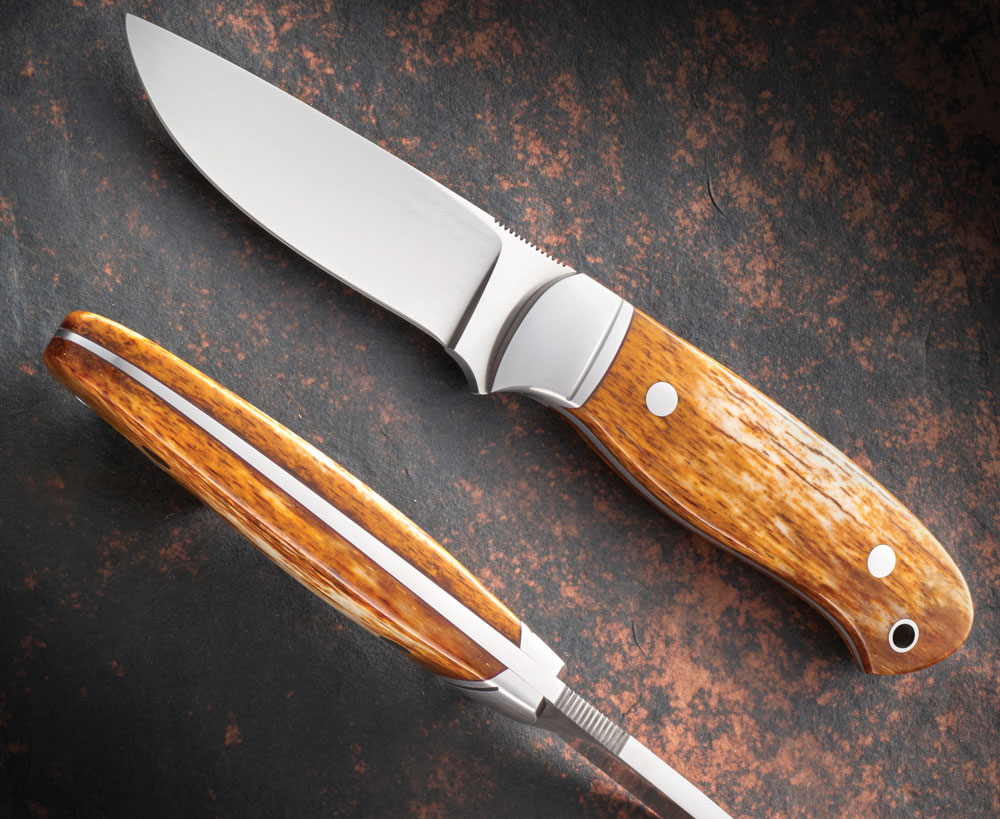 Unlike deer and elk horn, it is hard, tough, solid and dense. Rather than a large permeable main core, it has a tiny core, and a very strong outer covering, expanding with a lot of the horn. It can have an attractive brownish distinctive surface, making it extremely attractive for knife manages, as well as a safe, Bone Handle Knives comfortable grasping surface area.
website here
All About Bone Handle Knives
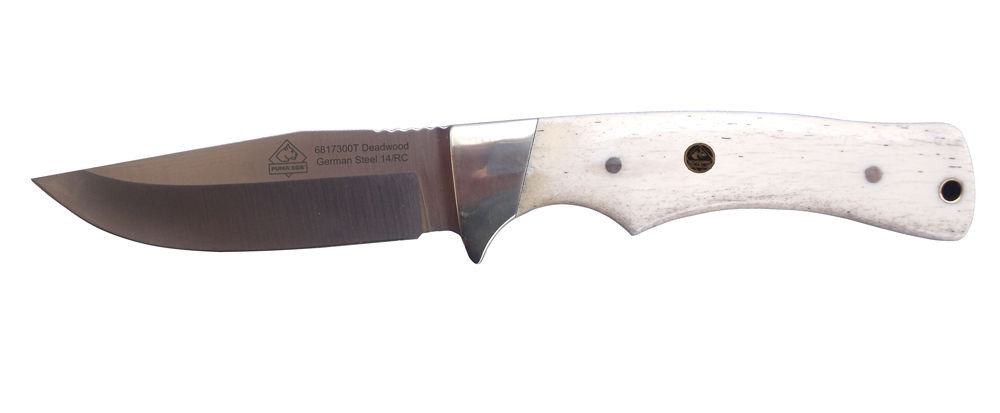 Crowns are the thick, wide flaring components of the horn where it attaches to the animal's head. The crowns are typically utilized on concealed tang knives, where the flavor is placed right into a hole pierced in the core of the horn and safeguarded with pins, epoxy, or hidden approaches. This creates a handle that appears as a strong piece of antler flaring out to the crown at the butt.
Horn crowns are also carved into belt fastenings, conchos, or various other jewelry or adornment and also fittings. One of the most irreversible approach of building and usage for a fine personalized knife is to have the horn skillfully stabilized, unless it's Sambar Stag which is rather difficult and also resilient. See maintained horn below.
Very same security as antlers above.: There are means to deal with the horn prior to as well as after it is put on a blade that alter the wear qualities, the appearance, and the sturdiness. One way is fire therapy, which burns the surface to a darker color, and solidifies it somewhat. Stag can additionally be tinted by spots or potassium permanganate baths.
Our Bone Handle Knives Diaries
Most likely the best is stress stabilization, done by numerous business throughout this country, where fluid phenolics are required under wonderful pressures right into the porosity of the material to fill any type of voids and Go Here also essentially water-proof the material. The exact same process is utilized on hardwoods (see my timber blade manage page below).Kudu horn is comparable fit as well as finish, both may be pressure stabilized and also sealed.: These are comparable. Though they differ fit, they have hefty ridges or texture along their length so that may in grip protection when placed on a blade manage. Their security is the very same as any kind of horn, and they are generally available.
A lot of the horns and also antlers noted on this web page can be maintained, that is fertilized with dyes and also resinous or phenolic liquid plastics (polymers or phenolics) at high pressures, essentially making a block of plasticized horn material. Bone Handle Knives. This is done some, I assume it holds a substantial opportunity to maintaining companies in the future.
The Buzz on Bone Handle Knives
Ivories are animal teeth. Ivories as well as tusks are abnormally thick, some of the densest, hardest animal components and also continues to be.Report this wiki page